Environmental and amenity monitoring of surface water quality in danube lakes for drip irrigation
Article Sidebar
Main Article Content
Abstract
The main principles of assessing the quality of irrigation water in the Danube lakes for drip irrigation systems according to agronomic, environmental and technical criteria are considered. Agronomic criteria are aimed at preventing the deterioration of soil fertility (salting, salinization, and alkalization) and toxic effects on the crops themselves. Environmental criteria are aimed at preventing deterioration of the quality of crop products (accumulation of harmful substances in the harvest) and reducing the negative impact on the environment. Technical criteria are aimed at preventing harmful impact on elements of the irrigation network and the hydro- ameliorative drip irrigation system. To achieve the goal of the work, the following tasks were implemented: appropriate calculations were made to assess the content of toxic salts, trace elements and heavy metals, suspended sediments of organic and mineral origin in irrigation waters, and the concentrations of phenols, petroleum products and synthetic surfactants were assessed relative to the maximum permissible indicators. The study found that according to agronomic criteria, the irrigation waters of the Danube lakes Kugurlui and Cahul correspond to the I quality class and can be used for drip irrigation systems on soils of different mechanical composition without restrictions. The surface waters of the Yalpug, Kitay and Katlabukh reservoir lakes correspond to the II quality class both in terms of average annual and maximum values II of hydrochemical indicators. The use of water of this quality for drip irrigation systems has a toxic effect on plants, inhibiting their growth and vegetation, and leads to the development of secondary soil salinization. The ecological-hygienic and ecological-toxicological state of irrigation waters from the Danube lakes does not threaten the reduction of the ability of soils to self-purify, the deterioration of the hygienic state and nutritional quality of agricultural products. Ecological and reclamation monitoring of turbidity and salt content in the surface waters of the studied water bodies showed that the least polluted in terms of suspended solids and total salt concentration were the lakes Cahul and Cugurlui. Irrigation waters of other studied lakes were assessed as «limitedly suitable» for micro-irrigation.
Article Details
References
2. Romashchenko M. I., Dotsenko V.I., Onopriienko D.M. (2007) Systemy kraplynnoho zroshennia: navch. posibnyk Za red. akademika UAAN M. I. Romashchenka [Speckling systems: navch] Dnipropetrovsk: OOO PKF «Oksamyt-tekst» [in Ukrainian].
3. Morozov O.V., Morozov, V.V., Isachenko, S.O. (2019). Naukovometo- dychni pidkhody otsinky iakosti pryrodnoi vody dlia zroshennia (na prykladi Kakhovs'koho zroshuvalnoho masyvu). [Scientific and methodical approaches to assessing the quality of natural water for irrigation (on the example of the Kakhovsky irrigation massif)]. Vodni bioresursy ta akvakul'tura. Kherson, issue 1. P. 90-101 [in Ukrainian].
4. Safranov T.A., Yurasov S.M., Verbova A.S. (2019). Mineralizatsiia pover- khnevykh vod ta pokaznyky prydatnosti dlia iryhatsijnykh tsilej (na prykladi okremykh vodnykh ob'iektiv Odes'koi oblasti). [Mineralization of surface water and indicators of suitability for irrigation purposes (on the example of individual water bodies of Odesa region)]. Ekolohichna bezpeka. no. 2(28). P. 69-74 [in Ukrainian].
5. Baliuk S., Vorotyntseva L., Drozd O. (2013). Yakist polyvnoi vody ta ii prykhovani ryzyky. [Irrigation water quality and its hidden risks] Available at: https:propozitsiya.com/ua/yakist-polivnoyi-vodi-ta-yiyi-prihovani-riziki [Accessed 27 September 2025] [in Ukrainian].
6. Riabkov S.V., Usata L.H. (2013). Pro vplyv kraplynnoho zroshennia, iakosti polyvnoi vody ta udobrennia na gruntovi protsesy ta produktyvnist' plodovykh nasadzhen'. [About the impact of drip irrigation, irrigation water quality and fertilizer on soil processes and productivity of fruit plantations]. Available at:
7. Vorotyntseva L.I. (2016). Hruntovo-melioratyvni pokaznyky chornozemu zvychajnoho za kraplynnoho zroshennia. [Soil improvement indicators of ordinary chernozem under drip irrigation]. Ahroekolohichnyj zhurnal no. 3. P. 63, 68. Available at:
8. Usatyj S.V., Usata L.H., (2016). Yakist' polyvnoi vody u zroshuval'nykh kanalakh ta ii prydatnist' dlia system kraplynnoho zroshennia. [The quality of irrigation water in irrigation canals and its suitability for drip irrigation systems]. In: Uman, UNUS, Materials of the IP of the International Scientific and Practical Conference «Actual Jesus of Modern Agrarian Science», November 17 2016. Uman, UNUS. Uman: Vydavnycho-polihrafichnyj tsentr «Vizavi», P. 89-91. Available at:
9. Pastukhov V.I., Tarasenko V.V. (2013). Pidhotovka vody dlia system kraplynnoho zroshennia. [Preparation of water for drip irrigation systems]. [Elektronnyj resurs]. Pratsi Tavrijs'koho derzhavnoho ahrotekhnolohichnoho universytetu vol 13, issue, no 3, p. 129, 133. Available at:
10. Ryabkov S.V. (2004) Analiz procesiv zasolennya ta osoloncyuvannya gruntu za kraplynnogo zroshennya mineralizovanymy vodamy. [Analysis of the processes of salinization and salinization of soil with mineralized waters] Melioraciya i vodne gospodarstvo. – issue no 91. P 74-82 [in Ukrainian].
11. Ryabkov S.V. (2009) Ocinka vplyvu kraplynnogo zroshennya na agrofizy- chni vlastyvosti, soovyj sklad ta soloncyuvatist gruntiv [Assessment of the influx of droplets on agrophysical power, salt storage and soil salinity] Агрохімія і ґрунтознавство. issue 71 P. 138-141 [in Ukrainian].
12. Czurkan O., Bilanchyn Ya., Suxorukova G. (2013) Chornozemy pivdenni Odeshhyny v umovax kraplynnogo zroshennya: Geneza, heohrafiia ta ekolohiia gruntiv [Black earth south Одещини in the conditions of tiny irri- gation: Genesis, geography and ecology of soils] Zb. nauk. prats mizhnarod. nauk. konf. (m. Lviv, 19-21 veresnia 2013 roku) Lviv: ВЦ ЛНУ Р. 331-337 [in Ukrainian].
13. Czurkan O.I. (2015) Vplyv kraplynnogo zroshennya na pokaznyky stanu rodyuchosti chornozemiv pivdennyx: Geneza, heohrafiia ta ekolohiia gruntiv [Influence of tiny irrigation on the indexes of the state of fertility of black ear th south: Genesis, geography and ecology of soils] Zb. nauk. prats. Lviv: VTs LNU Р. 263-269 [in Ukrainian].
14. Blazhko A.P. (2018) Ekologichne ocinyuvannya yakosti poverxnevyx vod v basejni richky Sarata dlya system kraplynnogo zroshennya. [Ecological assessment of surface water content in the Sarata River basin for drop irrigation systems] Visnyk Odeskoyi derzhavnoyi akademiyi budivnycztva ta arxitektury issue 70. P. 118-124. [in Ukrainian].
15. Blazhko A.P. (2019) Ocinyuvannya yakosti poverxnevyx vod richky Turunchuk dlya system kraplynnogo zroshennya. [Assessment of the quality of surface waters of the Turunchuk River for drip irrigation systems] Visnyk Odeskoyi derzhavnoyi akademiyi budivnycztva ta arxitektury issue 74. P. 135-144 [in Ukrainian].
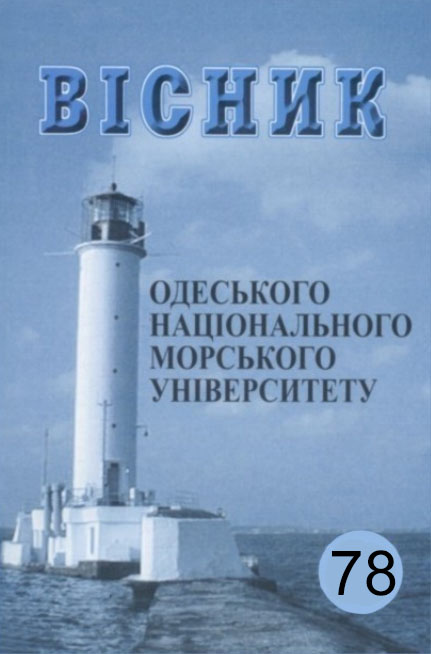
16. Blazhko A.P. (2024) Ekologichne ocinyuvannya yakosti poverxnevyx vod v mezhyrichchi Dnister-Pivdennyj Bug v mezhax Odeskoyi oblasti dlya kraplynnogo zroshennya. [Ecological assessment of surface water quality in the Dniester-Southern Bug interfluve within the Odessa region for drip irrigation] Visnyk Odeskogo nacionalnogo morskogo universytetu issue 3(74). P. 121-137 [in Ukrainian].
17. Kulibabin O.G., Osadchyj V.S. (2022) Koncepciya podalshogo rozvytku zroshennya na Odeshhyni v umovax ekologo-ekonomichnyx obmezhen. Monografiya. [The concept of further development of irrigation in the Odessa region under environmental and economic constraints Monograph] Odesa: ODABA 348 p. [in Ukrainian].
18. Osadchyi V.I., Nabyvanets B.Y., Osadcha N.M., Nabyvanets Yu.B. (2008) Hidrokhimichnyi dovidnyk: Poverkhnevi vody Ukrainy. Hidrokhimichni rozrakhunky. Metody analizu. [Hydrochemical Handbook: Surface waters of Ukraine. Hydrochemical calculations. Analysis methods]. Kyiv: Nika-Tsentr 656 р. [in Ukrainian].
19. Yakist pryrodnoi vody dlia system kraplynnoho zroshennia. Ahronomichni, ekolohichni ta tekhnichni kryterii. [Water quality for drip irrigation systems. Agronomic, ecological and technical criteria]. DSTU 7591:2014 Kyiv: Minekonomrozvytku Ukrainy, 2015. – 14 p. [in Ukrainian].